Free Quotes
Local Providers
Serving Northeast Ohio
Driveways, Sidewalks, Patios & More
Concrete Leveling in Canton, OH
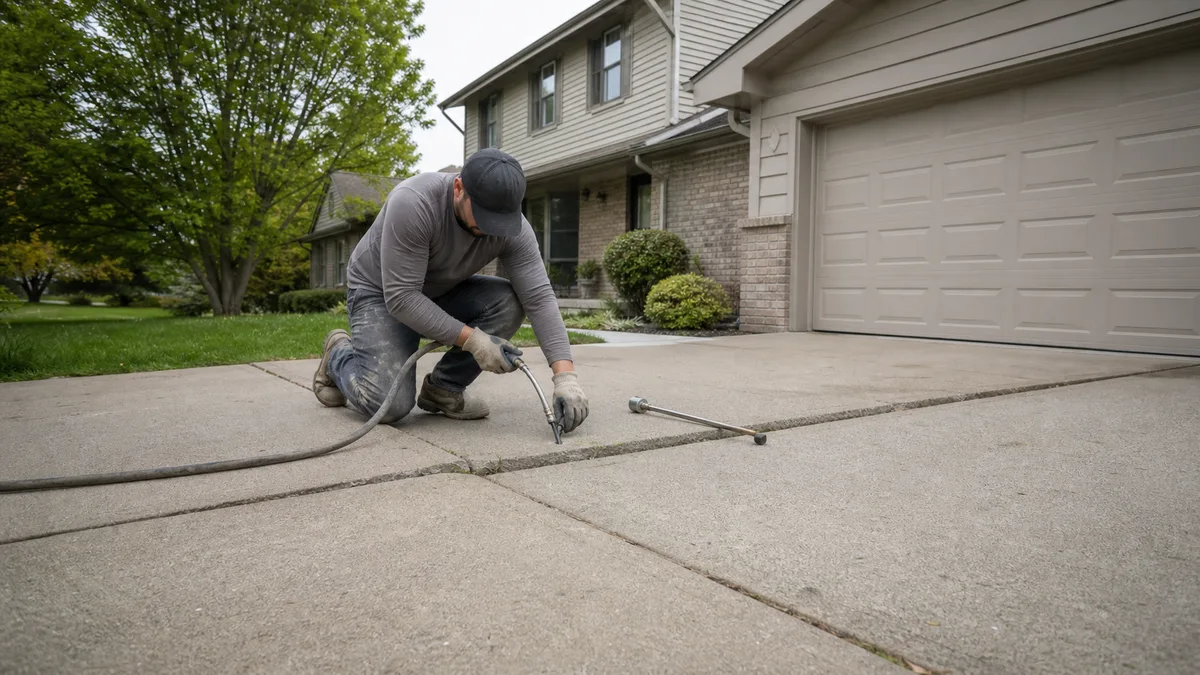
Sunken concrete in Canton can leave a hard bump at the garage, a sidewalk trip edge, or a porch that sends water toward the house. NE Ohio Concrete Leveling helps homeowners and property owners understand repair options and connect with providers for driveway, walk, porch, patio, and garage-slab lifting projects.
Provider coverage available in Canton and nearby Ohio communities is confirmed for each request.
Request a Quote — Canton
Get connected with a local provider. No obligation.
Request Received
Thanks — your request has been received. A local provider may contact you soon to discuss your concrete leveling project.
Submission Failed
Something went wrong. Please try again or call us.
Concrete Leveling in Canton
Canton and surrounding Stark County properties can experience concrete movement when backfill compacts, water erodes support, seasonal moisture changes the soil, or repeated freezing and thawing shifts the ground. Driveway approaches, front walks, porches, garage floors, and slabs beside a foundation are common places to notice a drop. The repair decision starts with identifying whether a panel settled downward or another section was pushed upward by frost, roots, or a different force.
Concrete leveling can be a practical option when the slab remains strong enough to lift as a unit. A provider should inspect cracks and edges, estimate the unsupported area, review drainage and nearby thresholds, and explain whether a cementitious or stone-slurry system, polyurethane foam, another repair, or replacement fits the condition. Leveling does not by itself fix a failed drain, active erosion, structural foundation movement, or severely deteriorated concrete.
This Canton guide is built for comparing recommendations, not just collecting prices. It explains suitable residential and commercial applications, the lifting sequence, method tradeoffs, cost drivers, optional joint and surface work, warning signs that point away from leveling, and the details that should appear in a written estimate.
Concrete Leveling in Canton: Quick Answers
Best candidate
A mostly intact slab that settled because the support beneath it compacted, shifted, or washed away
Frequent Canton projects
Garage approaches, driveway panels, front walks, porches, sidewalks, patios, and garage floors
Common lifting choices
Cementitious or stone-slurry placement and expanding polyurethane foam injection
Typical working time
Often several hours to one day; site access, scope, and repair method can extend the schedule
Needs another evaluation
Severe slab damage, upward heave, structural movement, utility leaks, or continuing soil loss
Prepare for a quote
Send the address, project dimensions, wide and close photos, drainage details, and expected use
These are planning guidelines, not a diagnosis. Slab condition, soil support, drainage, access, and nearby structures must be evaluated for the specific property.
What Concrete Can Be Leveled?
A good candidate is usually an intact slab that moved because the support beneath it settled or washed away. The same visible height difference can have different causes, so the surrounding conditions matter as much as the surface itself.
Driveway panels and garage approaches
Settlement at a garage entrance can create a hard bump, a rocking panel, or a low area that collects runoff near the overhead door.
What to check: Confirm which panels will move, the expected transition at the garage floor, how vehicle loads affect the plan, and where water should drain afterward.
Porches, patios, steps, and front walks
A dropped landing or slab can change step height, create an uneven joint, or direct water toward the house instead of away from it.
What to check: Door thresholds, columns, railings, attached masonry, step geometry, and foundation clearance can limit the safe finished elevation.
Sidewalks and pedestrian routes
One settled sidewalk section can create a trip edge even when the panel surface remains strong enough to keep in service.
What to check: Review neighboring squares, curbs, roots, utilities, accessibility needs, and responsibility for any public walk before selecting the repair.
Garage floors, sunrooms, and interior slabs
Poorly compacted fill, a void, or water movement can leave a non-structural interior slab low at a wall, threshold, or floor joint.
What to check: Foundation, wall, framing, or plumbing movement is outside ordinary slab leveling and should be evaluated by an appropriately qualified professional.
Commercial walks, entrances, equipment pads, and pool decks
Some intact slabs at businesses, rental properties, facilities, and recreation areas can be stabilized and lifted without full demolition.
What to check: Operating hours, traffic control, accessibility, loads, buried utilities, tenant access, and documentation may add requirements to the scope.
How the Concrete Leveling Process Works
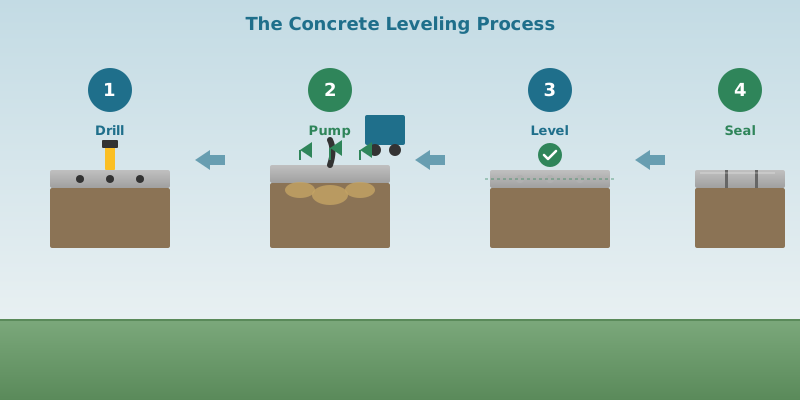
Mudjacking and foam lifting use different materials, but a careful project follows the same basic decision sequence: diagnose, plan, lift gradually, verify the result, and document what comes next.
1
Evaluate damage, movement, and site conditions
The provider examines cracks, joints, edges, adjacent structures, grade, drainage, roots, access, and possible voids. The inspection should distinguish downward settlement from upward heave and rule out unsuitable slabs.
2
Set a realistic lift plan
The estimate should identify the included panels, intended elevations, method, injection locations, and constraints at doors, garages, steps, curbs, or connected slabs.
3
Create access points and place material gradually
Slurry or foam is introduced beneath the concrete through planned openings. The crew monitors the panel while filling voids and lifting in controlled stages rather than forcing a single large movement.
4
Verify transitions and drainage
The result is checked against adjoining panels, walking surfaces, thresholds, and the intended flow of water. The final elevation may improve a problem without returning every area to its original position.
5
Patch, clean, and document follow-up items
Injection openings are patched and debris is removed. Return-to-service instructions and any remaining crack sealing, joint caulking, surface protection, drainage work, or monitoring should be explained in writing.
Mudjacking vs Polyurethane Foam Lifting
Both methods can raise settled concrete. The better choice depends on the slab, size of the void, access, desired set time, added weight, budget, and the provider's experience. Ask for a project-specific explanation instead of assuming one material is always superior.
Factor
Mudjacking
Polyurethane foam
Lifting material
A pumpable cementitious, soil-cement, or graded stone-slurry mixture, depending on the provider
A two-part polyurethane that reacts and expands beneath the concrete
Drilled openings
Typically uses larger access openings through the slab
Typically uses smaller access openings through the slab
Weight below the slab
Adds more material weight to the existing soil support
Adds comparatively little weight while filling the target space
Placement and control
Pumping and material placement fill the void and raise the panel in stages
Controlled expansion fills the void and raises the panel in stages
Traffic timing
May require a longer wait based on mixture, patching, and project conditions
Often permits an earlier return to use, subject to the installer’s instructions
Compare in the quote
Mixture, opening size, estimated volume, cure time, finishing, exclusions, and warranty
Foam type and density, estimated material, lift limits, finishing, exclusions, and warranty
When Leveling Is Not the Right Repair
A responsible estimate should explain when lifting is unlikely to solve the real problem. Replacement, drainage work, root management, utility repair, or structural evaluation may be more appropriate when any of these conditions are present:
×The slab is badly spalled, crumbling, or broken into several pieces that cannot be lifted as a stable panel.
×Roots, frost, or another force is actively pushing the concrete upward instead of support being lost beneath it.
×A foundation, load-bearing wall, footing, framing member, or structural floor is moving and requires a different evaluation.
×A failed drain, plumbing leak, downspout discharge, erosion channel, or other continuing source of soil loss remains active.
×The needed elevation would create an unacceptable slope or transition at a garage, door, step, railing, curb, or neighboring panel.
×Hidden utilities, bonded overlays, attached structures, reinforcement, or prior repairs make drilling or slab movement unsafe without more investigation.
Important distinction: exterior slab leveling is not the same service as repairing a settling foundation or load-bearing structural floor. If walls, foundations, framing, or utilities appear to be moving, seek the appropriate qualified evaluation before authorizing a slab lift.
What Affects Concrete Leveling Cost in Canton?
A price based only on square footage can miss the factors that drive a lifting job. Reputable quotes should define the slabs, repair method, included finishing work, and conditions that could change the scope.
Number, dimensions, thickness, location, and intended use of every panel in the scope
Amount of settlement, target elevation, unsupported area, and estimated material volume
Selected system and material: cementitious slurry, stone slurry, polyurethane foam, or another repair
Access for equipment, hoses, drilling, and cleanup around fences, landscaping, buildings, or interior rooms
Provider minimum charges, travel or mobilization, seasonal demand, and scheduling requirements
Separate correction of drainage, roots, utilities, soil loss, demolition, or replacement concrete
Photos and Details to Send With a Quote Request
Photos cannot replace an onsite inspection, but the right set can help a provider confirm service fit, prepare questions, and avoid an obviously incomplete estimate.
✓One wide view showing the complete driveway, walk, porch, patio, garage, or commercial work area
✓Close views of every uneven joint, crack, damaged edge, low spot, threshold, and connection to another slab
✓A low side-angle photo with a ruler or straightedge that helps show the height difference or unwanted pitch
✓Photos of gutters, downspouts, drains, slopes, roots, retaining edges, utilities, and areas where water collects
✓The project address or ZIP code, panel count, approximate dimensions, and whether the concrete carries vehicles or equipment
How to Compare Canton Concrete Leveling Quotes
Compare the written scope and expected outcome, not just the bottom-line price. Two estimates may look similar while including different slabs, materials, finishing work, or warranty conditions.
?Which exact panels and finishing items are included, and what is specifically excluded?
?What evidence points to the likely cause, and what drainage, soil, root, or utility issue must be corrected separately?
?Why is the proposed lifting system appropriate for the slab, void, access, and expected use?
?What finished elevation and drainage result is realistic at each threshold, step, garage, curb, and adjoining panel?
?Are drilling, patching, crack or joint work, surface protection, cleanup, and a return adjustment included?
?When may people and vehicles use the surface, and what maintenance or monitoring is recommended?
?What written warranty applies, what movement or site conditions are excluded, and is it transferable?
?Can the provider supply current insurance information and any credential required for the proposed work?
NE Ohio Concrete Leveling is an informational and lead-referral website, not the contractor performing the work unless explicitly stated. Verify the selected provider's identity, insurance, written scope, warranty, and any requirement that applies to your property before hiring.
Quote requests may also be submitted for nearby Stark County communities including North Canton, Massillon, Louisville, Plain Township, Jackson Township, Perry Township, East Canton, and Meyers Lake. Provider coverage varies, so include the project address or ZIP code for confirmation.
Is concrete leveling available in Canton and Stark County?
Provider service areas vary. Requests can be submitted for Canton and nearby Stark County communities, but include the project address or ZIP code so availability can be confirmed before scheduling an inspection.
Can a sunken driveway or garage apron be lifted?
Often, yes. If the panel is still intact, lifting may improve the transition at the overhead door and reduce a low spot. The estimate should state which driveway sections are included and what finished height is realistic at the garage floor.
Can a porch slab that slopes toward the house be corrected?
Lifting may improve the pitch of a sound porch or patio slab, but door thresholds, steps, posts, foundation clearance, and the surrounding grade limit how far it can move. Ask the provider to describe the intended water path and any drainage work that remains separate.
Can an uneven public sidewalk section be leveled?
An intact sidewalk square that settled downward may be liftable. Before authorizing work, confirm whether the section is public or private and who is responsible for it. Roots, curbs, utilities, and adjoining squares can also affect the appropriate repair.
What is the difference between stone-slurry leveling, mudjacking, and foam lifting?
Stone-slurry and mudjacking systems pump an aggregate-based or cementitious mixture beneath the slab, generally through larger openings. Polyurethane systems inject expanding foam through smaller openings and add less weight. Materials, equipment, set time, and pricing differ, so ask why the proposed system fits the slab and underlying condition.
How much does concrete leveling cost in Canton?
Cost depends on the number and size of panels, lift height, void volume, access, material, provider minimums, and included finishing work. Published Canton price ranges may describe one company or one method, so compare written scopes and onsite findings instead of relying on a universal per-square-foot figure.
Does concrete leveling include crack repair, joint caulking, or sealing?
Not necessarily. Lifting, injection-point patching, crack repair, joint caulking, cleaning, and surface sealing can be separate services. Ask the provider to list each included slab and each finishing item in writing.
Can cracked concrete still be lifted?
Some slabs with limited, stable cracks remain liftable, although the cracks will still be visible and may need sealing. Concrete that is crumbling, heavily spalled, or fractured into several unstable pieces is more likely to need partial or full replacement.
Can a sunroom or garage floor be leveled?
A non-structural interior slab may be liftable if fill beneath it settled or washed out. Movement involving footings, walls, framing, plumbing, or another load-bearing element requires a different evaluation, so describe structural symptoms before scheduling ordinary slab leveling.
How long does concrete leveling take?
Many residential lifting projects can be completed in several hours or within one working day. Access, panel count, lift height, method, and finishing work affect the schedule. Ask when foot or vehicle traffic can return because set and cure guidance varies by material.
When is replacement better than concrete leveling?
Replacement may be the responsible choice when the concrete is badly deteriorated, multiple fragments move independently, upward heave is active, reinforcement or edges have failed, or the required lift would create a new problem at a door, step, curb, railing, or adjoining slab.
Need Concrete Leveling in Canton?
Request a free quote today. A local provider can inspect your slab and recommend the best repair option.