Free Quotes
Local Providers
Serving Northeast Ohio
Driveways, Sidewalks, Patios & More
Concrete Leveling in Cleveland, OH
If you have sunken, uneven, or settled concrete in Cleveland, concrete leveling may help restore the surface without tearing everything out. NE Ohio Concrete Leveling helps connect homeowners and property owners with local providers who handle driveway leveling, sidewalk leveling, patio lifting, garage slab repair, and other concrete lifting projects in the Cleveland area.
Provider coverage available in Cleveland and nearby Ohio communities is confirmed for each request.
Request a Quote — Cleveland
Get connected with a local provider. No obligation.
Request Received
Thanks — your request has been received. A local provider may contact you soon to discuss your concrete leveling project.
Submission Failed
Something went wrong. Please try again or call us.
Concrete Leveling in Cleveland
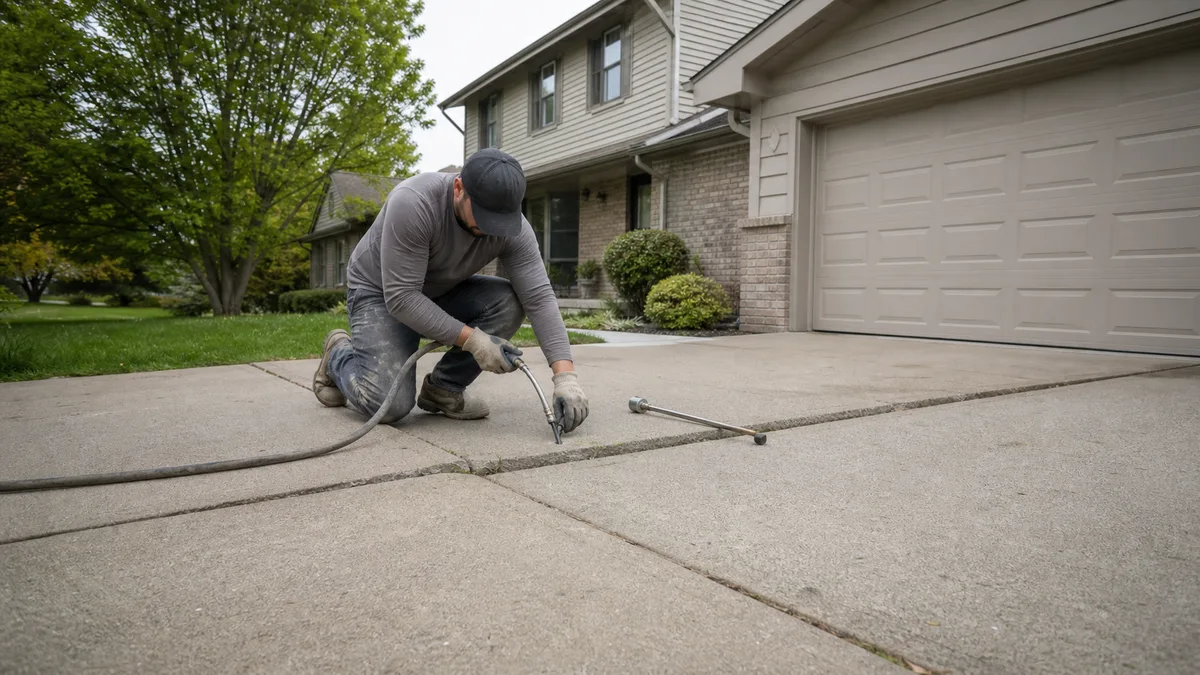
Cleveland properties see concrete movement from repeated freeze-thaw weather, water moving beneath slabs, inadequate drainage, disturbed or poorly compacted fill, and ordinary soil settlement. A driveway panel may drop at the garage, a sidewalk joint may become a trip edge, or a patio may begin directing water toward the house. The first question is not simply whether the slab is uneven, but why it moved and whether the concrete is still sound enough to lift.
Concrete leveling is commonly used for driveways, sidewalks, patios, porches, garage floors, walkways, steps, pool decks, and light commercial slabs. A provider should inspect the condition of the concrete, check the direction of drainage, estimate the void beneath the slab, and determine whether mudjacking, polyurethane foam lifting, another repair, or replacement is the responsible recommendation.
This page is designed to help you make that decision before you request pricing. It explains the repair process, the differences between common lifting methods, the conditions that make a slab a good or poor candidate, the factors that affect a Cleveland quote, and the questions worth asking each provider.
Concrete Leveling in Cleveland: Quick Answers
Best candidate
A mostly intact slab that settled because support was lost beneath it
Common methods
Cementitious slurry lifting (mudjacking) or polyurethane foam injection
Typical project length
Often several hours to one day; access and scope can extend the schedule
Common applications
Driveways, sidewalks, patios, porches, garage slabs, steps, and walkways
Get an inspection when
The slab is badly broken, actively heaving, near a foundation, or affected by drainage or roots
Quote accuracy improves with
Project address, wide and close photos, number of slabs, and drainage details
These are planning guidelines, not a diagnosis. Slab condition, soil support, drainage, access, and nearby structures must be evaluated for the specific property.
What Concrete Can Be Leveled?
A good candidate is usually an intact slab that moved because the support beneath it settled or washed away. The same visible height difference can have different causes, so the surrounding conditions matter as much as the surface itself.
Driveway slabs and garage approaches
Settled panels can leave a hard bump at the garage, a low spot that holds water, or an uneven joint between driveway sections.
What to check: Ask whether the planned lift preserves drainage away from the garage and whether the transition can be improved without stressing adjacent slabs.
Sidewalks and front walks
A dropped sidewalk square can create a trip edge at a joint even when the concrete itself remains in usable condition.
What to check: Confirm the finished height at adjoining slabs, steps, curbs, and public walk sections, and ask who is responsible for any municipal requirement.
Patios and porches
Settlement may create rocking furniture, uneven steps, or a slope that moves water toward the home instead of away from it.
What to check: Have the provider assess drainage, door thresholds, posts, attached structures, and the realistic finished slope before lifting begins.
Garage floors and interior slabs
A garage slab can settle at the overhead-door threshold, along a wall, or over a void created by poorly compacted fill or water movement.
What to check: Interior floor movement can have causes beyond ordinary slab settlement. Structural or foundation movement should be evaluated by the appropriate specialist.
Steps, pool decks, and small commercial slabs
Leveling may help improve uneven landings, deck sections, entrances, service walks, and other intact slabs without full demolition.
What to check: Loads, accessibility requirements, railings, utilities, and business access can change the repair plan and scheduling needs.
How the Concrete Leveling Process Works
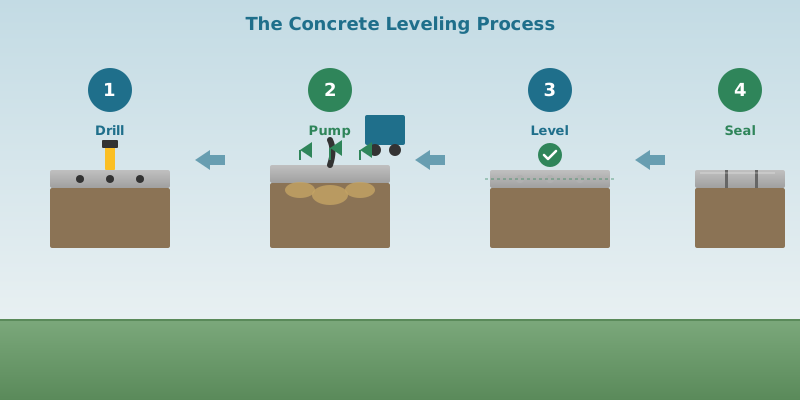
Mudjacking and foam lifting use different materials, but a careful project follows the same basic decision sequence: diagnose, plan, lift gradually, verify the result, and document what comes next.
1
Inspect the slab and diagnose the movement
The provider checks cracks, joints, edges, adjacent structures, drainage, access, and likely void locations. This is where lifting should be ruled out if the concrete or underlying condition is unsuitable.
2
Choose lift points and a repair method
Injection locations are planned around slab size, settlement, obstacles, and the material being used. The estimate should identify the included slabs and whether mudjacking or foam is proposed.
3
Drill access holes and inject in controlled stages
The lifting material is introduced beneath the slab in small, monitored increments. A careful lift reduces the chance of overshooting the target or placing unnecessary stress on the concrete.
4
Verify elevation, transitions, and drainage
The crew checks the slab against adjacent panels, thresholds, steps, and the intended drainage direction. Perfect restoration is not possible in every case, so the expected tolerance should be discussed before work begins.
5
Patch, clean up, and explain return-to-service timing
Injection holes are patched and the work area is cleaned. Crack sealing, joint sealing, or surface repair may be separate line items. Follow the provider’s instructions before walking or driving on the repaired area.
Mudjacking vs Polyurethane Foam Lifting
Both methods can raise settled concrete. The better choice depends on the slab, size of the void, access, desired set time, added weight, budget, and the provider's experience. Ask for a project-specific explanation instead of assuming one material is always superior.
Factor
Mudjacking
Polyurethane foam
Lifting material
A pumpable cementitious or soil-cement slurry
Two-part polyurethane that expands beneath the slab
Injection openings
Generally uses larger access holes
Generally uses smaller access holes
Added weight
Adds more material weight below the slab
Adds comparatively little weight
Lift control
Lift is controlled through slurry placement and pumping
Expansion can support precise, staged lifts when applied carefully
Return to service
May require a longer wait, depending on the mixture and project
Often supports a faster return to foot or vehicle traffic
Questions to ask
Mixture used, hole size, cure time, void filling, and warranty terms
Foam type, density, estimated material use, lift limits, and warranty terms
When Leveling Is Not the Right Repair
A responsible estimate should explain when lifting is unlikely to solve the real problem. Replacement, drainage work, root management, utility repair, or structural evaluation may be more appropriate when any of these conditions are present:
×The slab is crumbling, severely spalled, or fractured into multiple unstable pieces.
×Tree roots or frost heave are pushing the slab upward rather than support being lost underneath it.
×A foundation, load-bearing wall, or structural floor is moving and needs a different type of evaluation.
×Ongoing washout, a leaking utility, failed drain, or major grading problem would continue removing support after the lift.
×The desired elevation or slope cannot be reached without creating a new problem at a door, step, curb, railing, or adjacent slab.
×Previous repairs, bonded toppings, overlays, or hidden utilities make drilling or lifting unsafe without additional investigation.
Important distinction: exterior slab leveling is not the same service as repairing a settling foundation or load-bearing structural floor. If walls, foundations, framing, or utilities appear to be moving, seek the appropriate qualified evaluation before authorizing a slab lift.
What Affects Concrete Leveling Cost in Cleveland?
A price based only on square footage can miss the factors that drive a lifting job. Reputable quotes should define the slabs, repair method, included finishing work, and conditions that could change the scope.
Number, size, thickness, and location of the slabs included in the scope
How far each section has settled and how much void must be filled
Method and material selected: mudjacking, polyurethane foam, or another repair
Access for equipment, hoses, and drilling around fences, landscaping, or interior spaces
Provider minimum charges, mobilization distance, and seasonal scheduling
Drainage, root, utility, or soil problems that need separate correction
Photos and Details to Send With a Quote Request
Photos cannot replace an onsite inspection, but the right set can help a provider confirm service fit, prepare questions, and avoid an obviously incomplete estimate.
✓One wide photo showing the entire driveway, walk, patio, porch, or garage area
✓Close photos of each uneven joint, crack, low spot, and affected threshold
✓A side-angle photo that makes the height difference or slope visible
✓Photos of downspouts, drains, retaining edges, roots, or places where water collects
✓The project address or ZIP code, number of affected slabs, and approximate dimensions
How to Compare Cleveland Concrete Leveling Quotes
Compare the written scope and expected outcome, not just the bottom-line price. Two estimates may look similar while including different slabs, materials, finishing work, or warranty conditions.
?Which slabs and repair items are included, and which are excluded?
?Why is the proposed method appropriate for this slab and underlying condition?
?What finished elevation, transition, and drainage result is realistic?
?Are hole patching, crack or joint sealing, cleanup, and return visits included?
?When can people walk on the slab, and when can a vehicle use it?
?What written warranty is offered, what does it cover, and what conditions void it?
?Can the provider supply current insurance information and any credential required for the work?
NE Ohio Concrete Leveling is an informational and lead-referral website, not the contractor performing the work unless explicitly stated. Verify the selected provider's identity, insurance, written scope, warranty, and any requirement that applies to your property before hiring.
Serving Cleveland and nearby communities including Parma, Lakewood, Cleveland Heights, Shaker Heights, Euclid, Strongsville, Westlake, Rocky River, Brooklyn, Independence, Berea, and Garfield Heights.
Is concrete leveling available throughout Cleveland?
Service availability varies by provider, but requests may be matched with providers serving Cleveland neighborhoods, the East Side, the West Side, and nearby Cuyahoga County communities. Include your ZIP code and project address when requesting a quote so coverage can be confirmed.
Can a sunken driveway near the garage be lifted?
Yes. If the driveway slab is still intact, mudjacking or foam lifting can raise the settled panel near the garage entrance to reduce the bump and improve the transition.
Is sidewalk leveling cheaper than replacement?
Leveling an intact sidewalk section often avoids demolition, disposal, forms, and a new pour, so it can cost less than replacement. The actual comparison depends on the number of sections, the amount of lift, access, concrete condition, provider minimums, and whether roots or drainage must also be corrected.
What causes concrete to sink in Cleveland?
Lake-effect moisture, freeze-thaw cycles, soil washout, poor drainage, and aging infrastructure all contribute to concrete settlement in Cleveland.
How fast can I get a quote?
Response time depends on provider availability and seasonal demand. Submit wide and close-up photos, the project address, the number of affected slabs, and a short description of drainage or trip-hazard concerns to help a provider evaluate the request efficiently.
How long does concrete leveling take?
Many residential lifting projects can be completed in several hours or within one working day, but the schedule depends on access, the number and size of slabs, the amount of settlement, and the repair method. Ask the provider when foot or vehicle traffic can safely return because cure and set times vary by material.
Is polyurethane foam better than mudjacking?
Neither method is automatically best for every Cleveland property. Foam uses smaller injection points, adds less weight, and generally returns to service sooner. Mudjacking uses a heavier cementitious slurry and can be practical for some larger voids or budget-sensitive projects. The slab, soil, access, drainage, lift tolerance, and provider experience should drive the choice.
Can concrete leveling fix water that drains toward my house?
Lifting may improve the slope of an intact patio, walk, or driveway, but it does not correct every drainage problem. Downspouts, grading, leaking utilities, blocked drains, and continuing soil washout may need separate work. Ask the provider to explain the intended finished slope and any drainage issue that must be corrected first.
Can tree-root damage be fixed by leveling?
Leveling is intended to raise concrete that has settled downward; it does not remove upward pressure from active roots. A root-lifted slab may require root evaluation, selective removal where appropriate, grinding for a limited height difference, or replacement. Avoid cutting major roots without guidance from a qualified tree professional.
Do cracks mean the slab has to be replaced?
Not always. A slab with limited stable cracks may still be liftable, although the crack will remain and may need sealing afterward. Concrete that is crumbling, badly displaced, fractured into many moving pieces, or too deteriorated to lift safely is more likely to need replacement.
Does leveling include crack sealing or joint repair?
Not necessarily. Lifting, injection-hole patching, crack repair, joint sealing, surface repair, and concrete sealing may be priced as separate items. Ask for a written scope that identifies exactly which repairs and cleanup are included.
Need Concrete Leveling in Cleveland?
Request a free quote today. A local provider can inspect your slab and recommend the best repair option.